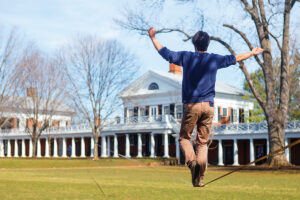
Rotunda and Academical Village
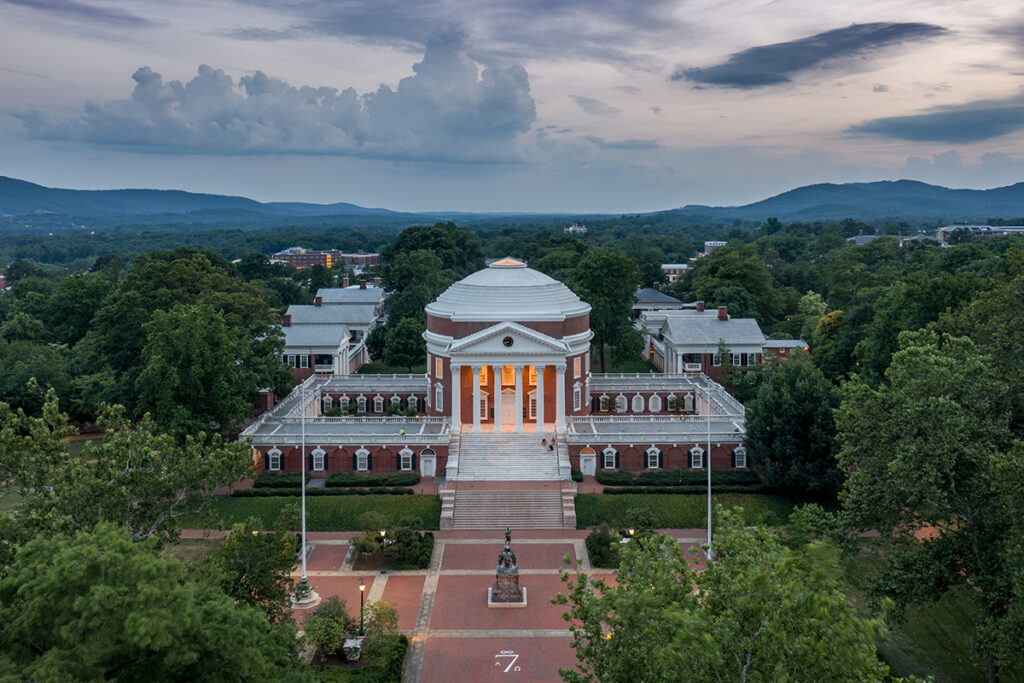
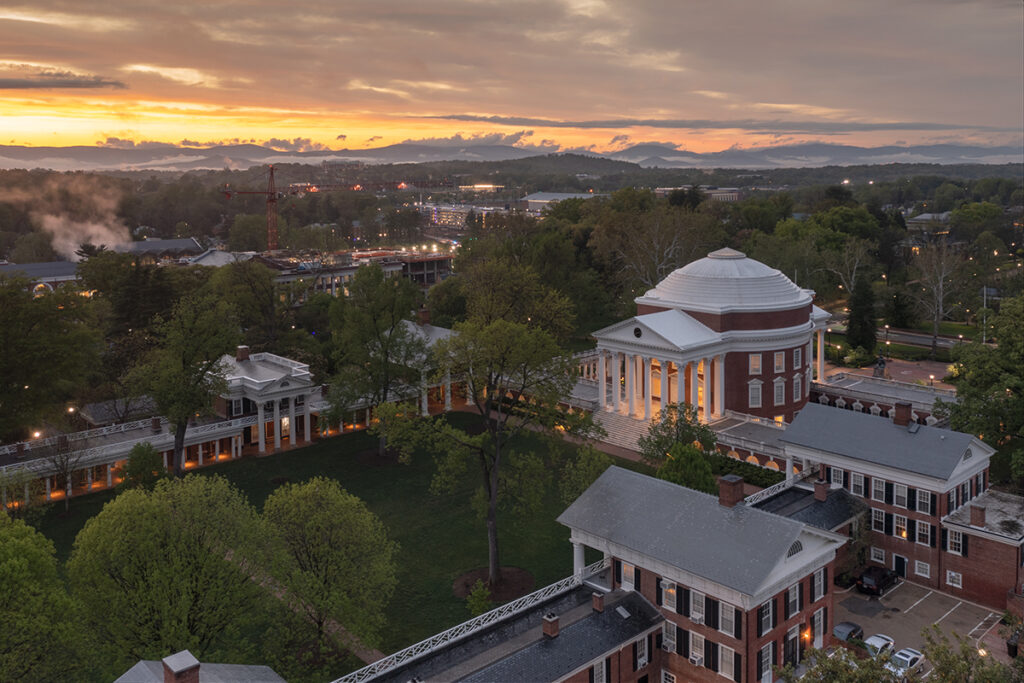
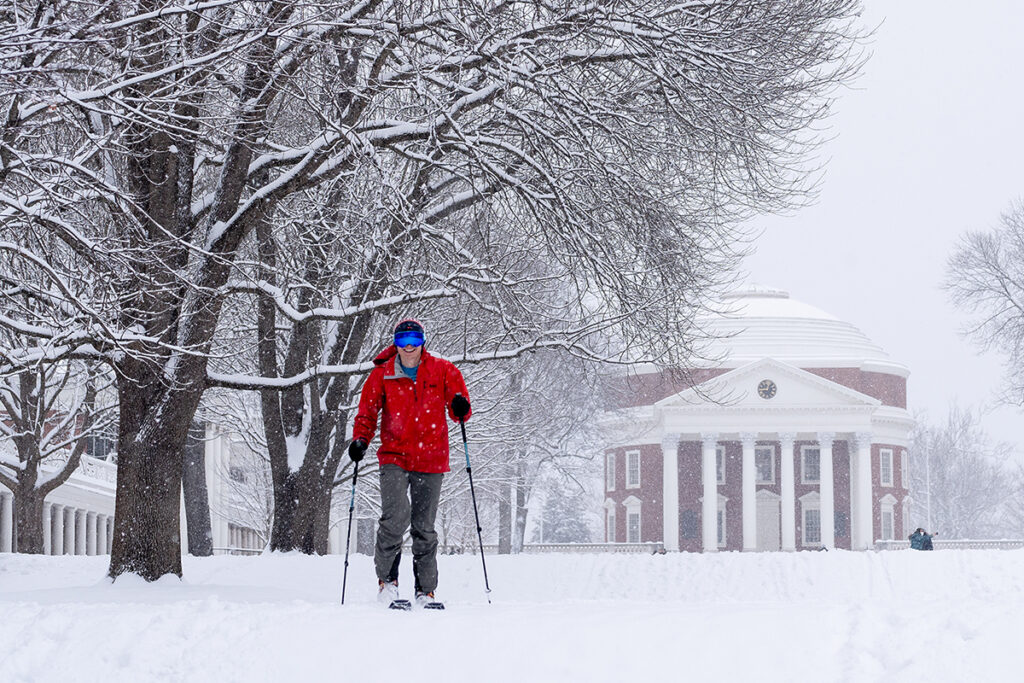
“this institution will be based on the illimitable freedom of the human mind. for here we are not afraid to follow truth wherever it may lead, nor to tolerate any error so long as reason is left free to combat it.”
~ Thomas Jefferson
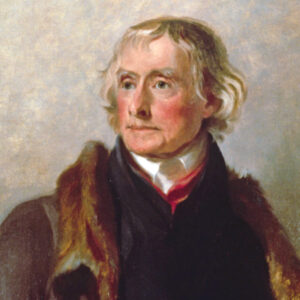
President Thomas Jefferson founded the University of Virginia in 1819. Jefferson, who lived nearby at his mountaintop home, Monticello, was deeply involved in the creation of the University, planning the curriculum, recruiting the initial faculty, and designing what he called the Academical Village, an arrangement of residential and academic buildings around a central green space called the Lawn. The Academical Village is recognized as a UNESCO World Heritage Site for its cultural and architectural importance. Jefferson’s vision was to create a university offering courses of study beyond religion and politics, introducing a pioneering model of higher education in the United States.
When it opened for classes in 1825, the faculty of eight taught ancient and modern languages, moral and natural philosophy, chemistry, law, and medicine. Over the past 200 years, the University has experienced significant changes in its student body and faculty. In 1953, Walter N. Ridley became the first African American graduate of the University, and in 1970 UVA fully integrated undergraduate education in the College of Arts and Sciences, enrolling women in significant numbers. These and other social changes have strengthened the University, which in the latter part of the 20th century established itself as one of the nation’s leading public universities.
As its third century continues, the University’s long-term goals for 2030 focus on strengthening its foundation, cultivating a vibrant and inclusive community, advancing discovery that improves lives, and promoting service to society.
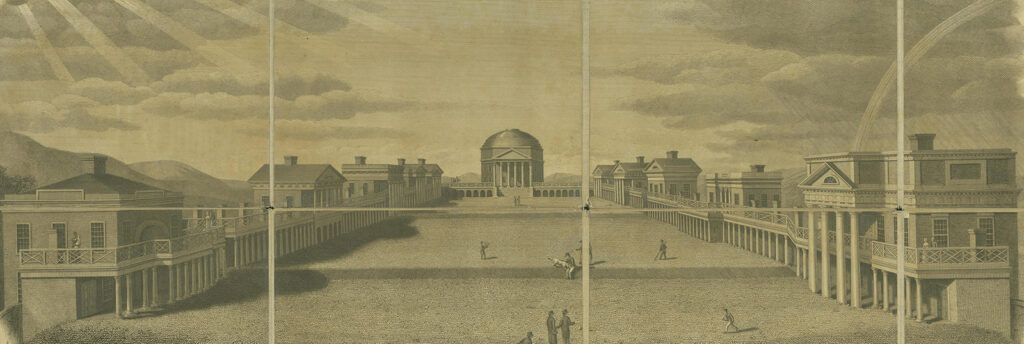
Henry Tanner’s 1826 engraving of the Academical Village
Rotunda
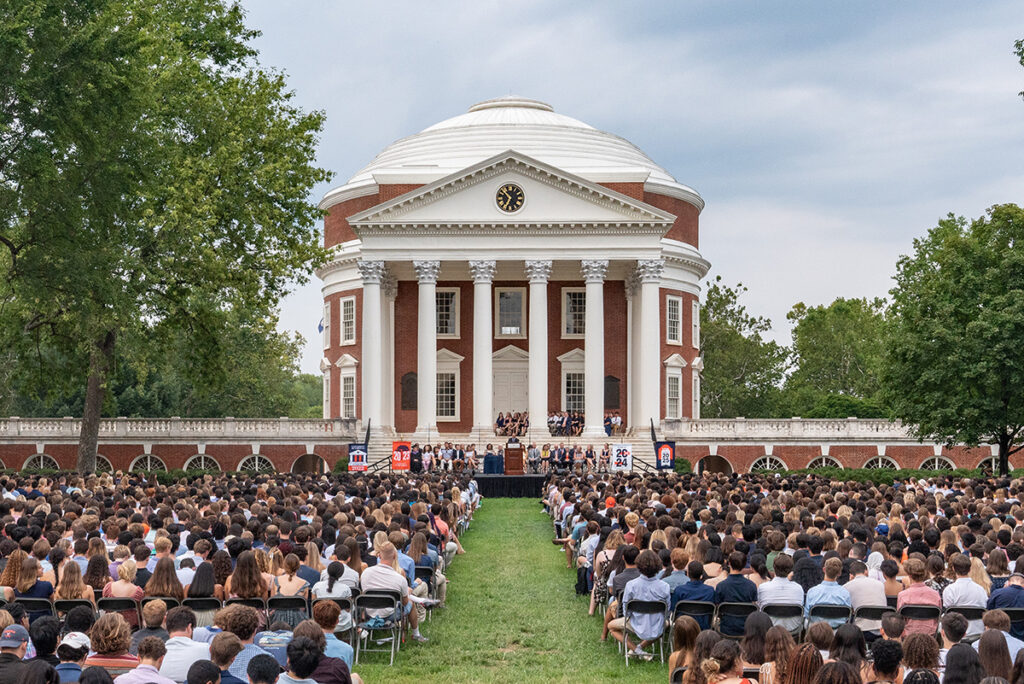
The centerpiece of the Academical Village is the Rotunda, which stands at the north end of the Lawn. The building, modeled on the Pantheon in Rome, was the last structure completed on the original Lawn; it was still under construction when Jefferson died in 1826. Originally the University of Virginia’s library, the Rotunda today is one of the most recognizable symbols of the University.
Over the years, the interior of the Rotunda has been modified on multiple occasions. In October 1895, a fire gutted the building, leaving only the brick walls intact. The redesigned interior reduced Jefferson’s three-floor layout to two. In the 1970s, the Rotunda was restored through major historic preservation efforts to more closely reflect its original design. During a renovation completed in 2016, workers discovered a chemical hearth associated with early science instruction, considered among the earliest academic chemistry teaching spaces in the United States.
Today the Rotunda’s Dome Room is used for ceremonies, special events, dinners, and lectures, while it also serves as a symbolic site for academic milestones such as dissertation defenses. Visitors can also view nine interpretive wall panels, several of which address slavery at the University. (Rotunda Hours and Visitor Information).
The Pavilions & Lawn Rooms
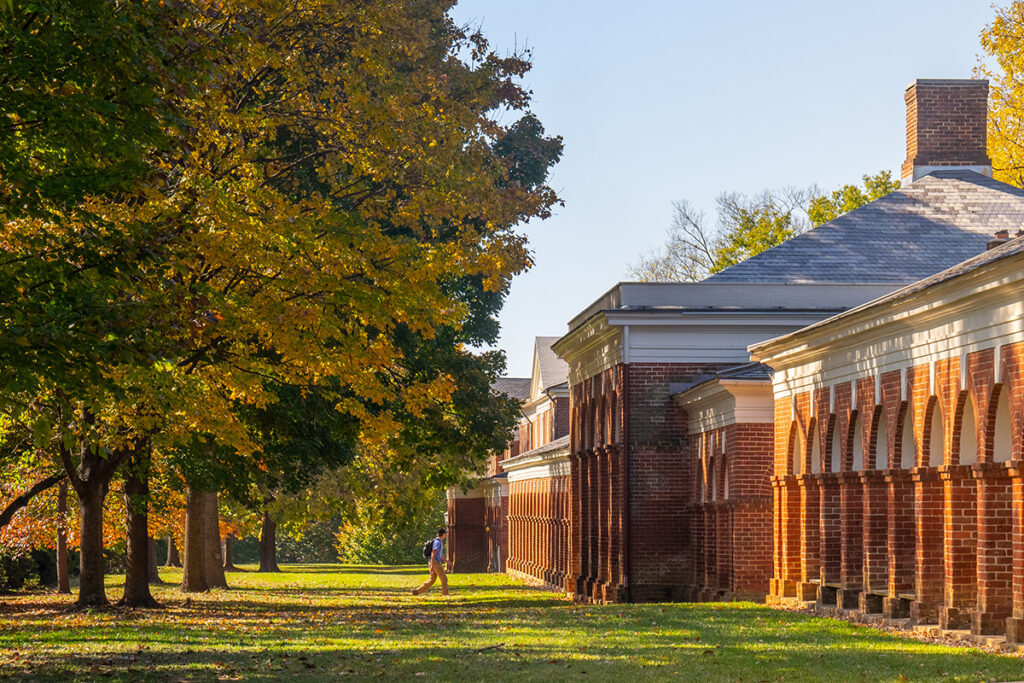
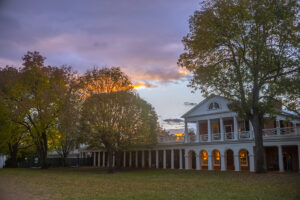
Students and faculty live and learn within the Pavilions and rooms surrounding the perimeter of the Lawn. Each of the 10 Pavilions features a distinct design reflecting Jefferson’s interpretation of classical architectural forms, and eight of them continue to serve as residences for faculty and their families. The 54 Lawn rooms are highly sought after by rising fourth-year students. Each room includes a fireplace and air conditioning, while bathroom facilities are shared and located in nearby common areas.
Pavilion Gardens
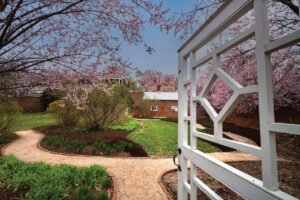
Like the Pavilions themselves, the Pavilion Gardens reflect Thomas Jefferson’s design for the Academical Village, combining residential, instructional, and garden spaces. Originally conceived as pleasure and working gardens, these areas also functioned within a system sustained by enslaved labor, which supported both household and landscape maintenance across the Lawn. Over time, the gardens included a mix of ornamental plantings, kitchen plots, and service areas. The current appearance of the Pavilion Gardens largely results from restoration efforts undertaken beginning in 1948 and continuing through the mid-1960s, which sought to recover Jeffersonian design principles while accommodating modern campus use. Today, the gardens are generally open to the public when not reserved for classes, events, or maintenance, offering tranquil spots to relax and explore the University’s early days.
The Lawn
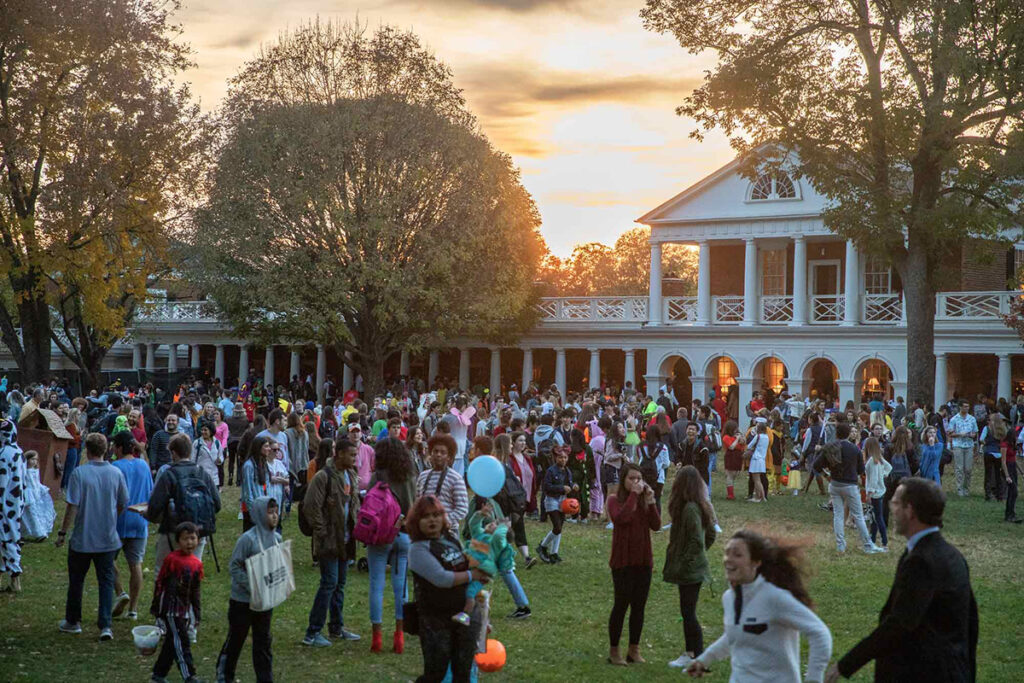
Symbolic and idyllic, this grassy expanse between the Pavilions remains one of the best-loved spots for students and faculty to gather on Grounds. Used as an informal classroom, sports field and picnic spot, the Lawn becomes a centerpiece during Graduation, officially known as “Finals.” Statues of George Washington, Thomas Jefferson and a prominent sculpture entitled, Blind Homer With His Student Guide, are found towards the southern end of the Lawn.